En
- En
- عربي
- Deutsch
- Français
- Español
- Русский язык
- 한국어
- Nederlands
- Português
- 日本語
- Türkçe


Let's Have A Chat
We Have A Exclusive Offer For New Customers! Would You Like To Get Customized Packaging Solutions?
Let's Have A Chat
Would You Like To Get Customized Packaging Solutions Now? Just Leave Some Details And Our Team Will Contact You Quickly!


NEWS
INFORMATION

NEWS
INFORMATION


How to Choose the Best Frozen Food Packaging for Your Business?
2025-06-06 14:56:42
Click:
“
For frozen foods to retain flavor, increase shelf life, and improve brand trust, proper packaging is essential. This article examines insulation materials, package formats, industry developments for frozen food packaging, and important...
”
In the frozen food sector, the first line of defense against moisture loss, freezer burn, and quality degradation is appropriate packaging.In addition to maintaining flavor and texture, proper frozen food packaging affects customer confidence and brand image.This article will help you stay competitive by examining frozen food packaging market trends, packaging options, important selection criteria, cost considerations, and useful advice.
Due to their convenience and ability to retain nutrients, frozen meals have gained popularity among consumers in recent years.At a compound annual growth rate (CAGR) of 5.34%, the worldwide frozen food packaging market is expected to reach USD 17.20 billion by 2032 from USD 11.95 billion in 2025.Ready-to-eat meals are a top priority for millennials and working families, which is driving demand for simple-to-make frozen options.

The Role of Insulation in Frozen Food Packaging Bag
A. Importance of maintaining temperature
From production to retail display, frozen goods must stay below crucial temperature thresholds, which are typically -18 °C or lower.Thaw-refreeze cycles can result from any variation above this threshold, even for a small period of time. These cycles deteriorate texture and encourage the growth of bacteria.
B. Types of insulation materials
Polyurethane foam inserts, vacuum-insulated panels, and metallized films (such as aluminum laminated LDPE) are examples of common insulation techniques.Compared to non-metallized films, metallized films can reduce temperature incursion by 10–15% and deflect radiant heat.
C. Impact of insulation on food quality and safety
Sufficient insulation reduces microbiological development, maintains texture, and avoids partial thawing.For example, pork held at higher temperatures showed faster microbial deterioration, according to a study published in Foods (2022).In particular, bacterial growth was demonstrated by the microbial compositions and functional potentials that were comparable to those at room temperature after preservation at 10 °C.
Types of Frozen Food Packaging Bag
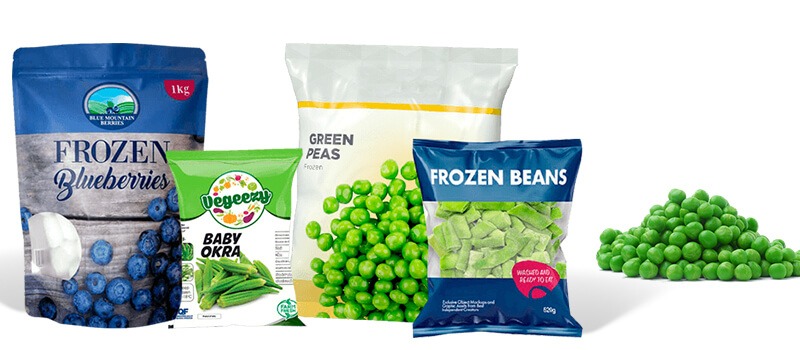
Formats for frozen food packaging differ depending on the use, but they always balance cost, convenience, and preservation:
-Flexible Plastic Pouches
These pouches are versatile and lightweight, making them perfect for single-serve items like soups or veggies.Their minimal material consumption lowers delivery expenses.
Outstanding recyclability and heat resistance—fit for oven-to-table cooking.
-Vacuum-Sealed Bags
Vacuum-sealed bags reduce freezer burn and increase the shelf life of meat and seafood by up to 50% by eliminating oxygen.
Important Things to consider for When Choosing Frozen Food Bag
A. Product Type and Characteristics
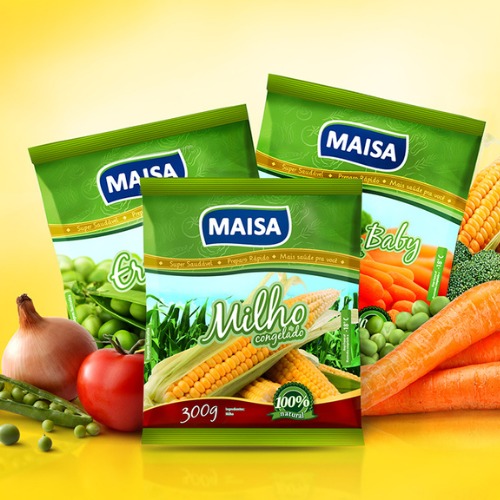
Different frozen foods have different packaging needs. For example, vegetables need materials that can withstand punctures to prevent freezer burn, whereas meats need high-barrier films to prevent oxidation.Material selection will be guided by the product's moisture content, fat content, and reheating technique.
B.The Needs for Preservation and Shelf Life
Good frozen food packaging bag resists tearing and puncturing while keeping out oxygen and moisture.When compared to ordinary polyolefin bags, materials such as PET/NY/PE laminates provide superior barrier qualities and can increase shelf life by up to 50%.
C.Transportation and Storage Needs
Frozen goods are subjected to handling abuse and temperature changes.From the production to the retail shelf, packaging must remain intact.During lengthy shipping routes, structures with strengthened seals and films that are resistant to punctures, like multilayer barrier pouches, stop leaks and contamination.
Conclusion
Selecting the appropriate frozen food packaging pouch is crucial for preserving product shelf life as well as enhancing your brand's reputation in a cutthroat industry.With years of experience in flexible packaging, Puropak focuses on creating unique solutions for the frozen food sector that provide excellent barrier performance, insulation, and sustainability.
Contact Puropak today!Depending on the features of your goods and the shipping circumstances, we offer professional guidance and quick prototyping for frozen food bags constructions.