En
- En
- عربي
- Deutsch
- Français
- Español
- Русский язык
- 한국어
- Nederlands
- Português
- 日本語
- Türkçe


Let's Have A Chat
We Have A Exclusive Offer For New Customers! Would You Like To Get Customized Packaging Solutions?
Let's Have A Chat
Would You Like To Get Customized Packaging Solutions Now? Just Leave Some Details And Our Team Will Contact You Quickly!

Request Coffee Bag Samples
Get A Quote
Share your requirements, get custom‑tailored pricing.We will reply within 24 working hours with detailed offer including unit price, MOQ, lead‑time and shipping terms.

NEWS
INFORMATION

NEWS
INFORMATION


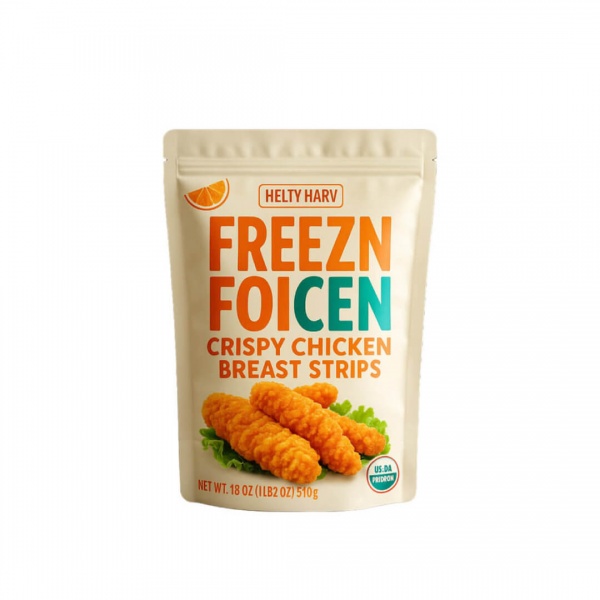

2025 Packaging Challenges Facing Frozen Food Packaging
2025-07-17 15:51:27
Click:
“
As global demand for frozen food surges, packaging challenges—like temperature resistance, barrier integrity, and sustainability—take center stage. Frozen food packaging industry are shifting to recyclable, high-performance solutions...
”
The frozen food industry is still expanding quickly.With a compound annual growth rate (CAGR) of 5.34 percent, the frozen food packaging market is expected to reach USD 17.20 billion by 2032 from its 2024 valuation of USD 11.38 billion.But there are packaging issues with this rise.

Frozen food packaging must be able to tolerate high temperatures, maintain freshness, guard against contamination, and have barrier qualities to stop moisture intrusion and freezer burn. Packaging is essential to the success of frozen foods since it has a direct impact on shelf life, consumer happiness, and food safety.This article examines the issues facing frozen food packaging today, with an emphasis on consumer expectations, technical innovation, and sustainability.
What is Frozen Food Packaging?

Materials and structures created especially to maintain food quality at freezing temperatures—typically between -18°C and -30°C—are referred to as frozen food packaging bag.Its primary goals are to prevent microbiological development, oxygen exposure, moisture loss, and mechanical damage while being transported and stored.
Aluminum foils, laminated films, polyethylene terephthalate (PET), polypropylene (PP), and polyethylene (PE) are the most commonly utilized materials.Although these materials are flexible, reasonably priced, and provide good moisture barriers, many of them have issues with long-term performance and recyclability.
Challenges In Frozen Food Packaging Bag

1.Temperature Control Challenges
Frozen foods frequently travel thousands of kilometers over a convoluted supply chain.To avoid melting and refreezing, which can reduce texture, flavor, and nutritional content, a steady cold chain must be maintained.Products may become dangerous due to a single temperature breach, resulting in recalls and financial losses.
Temperature variations cause ice crystallization and freezer burn, particularly in foods like meats and vegetables that are sensitive to moisture.Twenty percent of food losses worldwide in the frozen sector are attributed to inadequate temperature management, according to the International Institute of Refrigeration (IIR).Packaging needs to be strong enough to continue working in spite of these variations.
2.Material Selection Issues
A. Typical Components of Frozen Food Packaging Bag
Multi-layer laminates that combine PET, aluminum, and LDPE are examples of traditional packaging architectures.These materials have strong physical and barrier qualities, but because of their layered structure, they are frequently not recyclable.
B. Conventional Packaging Materials' Drawbacks
Although they provide good protection, these conventional materials are frequently non-biodegradable, challenging to separate for recycling, and add to the expanding issue of plastic waste.Additionally, they are not adaptable enough to satisfy shifting market and legal requirements for sustainability.
3.Oxygen Control and Barrier Characteristics
Strong barrier properties are essential to keep ice crystals and microbial growth at bay.
To preserve food safety and sensory quality, effective bags for frozen food packaging must restrict light, moisture, oxygen, and scents.Lipid oxidation can be accelerated by even a small amount of air exposure, resulting in discoloration and rancidity.
Extended shelf life and improved product preservation are now made possible by technological advancements including active oxygen scavengers, vacuum skin packaging (VSP), and EVOH (ethylene vinyl alcohol) layers.
4.Concerns about Sustainability
The use of non-recyclable composites in frozen food packaging frequently adds to landfill waste.
The frozen food industry is under fire due to its heavy reliance on non-recyclable plastics.In 2018 alone, 14.5 million tons of municipal solid trash came from plastic containers and packaging in the United States, according to the Environmental Protection Agency (EPA).
B. Demand from Customers for Eco-Friendly Bag Packaging Options
64% of customers worldwide take sustainability into account when buying packaged goods, according to a 2023 Deloitte study, with packaging recyclability ranked as the top issue.In order to preserve their market share and customer loyalty, frozen food manufacturers need to adapt to this need.
C. New Developments in Sustainable Packaging for Frozen Foods
The frozen food sector is changing as a result of new advancements in sustainable packaging, including compostable films, recyclable mono-material pouches, and paper-based wraps.Leading businesses like Huhtamaki are establishing standards by providing recyclable substitutes that satisfy performance and environmental standards.
Puropak actively adheres to this trend by including eco-friendly and recyclable materials into our frozen food packaging options. With our production experience and dedication to sustainability, we hope to offer high-performing, useful packaging that promotes a greener future and satisfies the needs of the worldwide market.

5.Market Trends and Customer Preferences
In freezer packaging, customer preferences and industry trends are shifting toward solutions that are easy to open, resealable, and aesthetically pleasing due to an increased emphasis on both functionality and brand narrative.Transparent windows, microwave-safe materials, small portion sizes, and QR codes for improved product information are all popular trends.Brands that prioritize sustainability and ease of use are better positioned to stand out on store shelves and cultivate enduring customer loyalty in a market that is becoming more and more competitive.
Conclusion

Innovation in packaging is more important than ever. Extreme temperatures must be tolerated by freezer packaging in order to maintain food quality, increase shelf life, and satisfy changing consumer and environmental requirements.
Solutions for freezer packaging must strike a balance between sustainability, barrier performance, and temperature resilience.Frozen food packaging manufacturer must combine cutting-edge materials, intelligent technologies, and customer-focused design to prosper in a shifting market.
At Puropak, we are proud to be at the forefront of this transformation. With years of manufacturing experience, state-of-the-art facilities, and a dedication to sustainable innovation, we provide customized frozen food packaging solutions that satisfy international market demands as well as regulatory requirements.
We extend an invitation to manufacturers, distributors, and frozen food companies to collaborate with Puropak in creating a more competitive and sustainable future. Get in touch with us right now to find out how our performance-driven, eco-friendly, and high-barrier packaging may improve the success of your product in the freezer section.