En
- En
- عربي
- Deutsch
- Français
- Español
- Русский язык
- 한국어
- Nederlands
- Português
- 日本語
- Türkçe


Let's Have A Chat
We Have A Exclusive Offer For New Customers! Would You Like To Get Customized Packaging Solutions?
Let's Have A Chat
Would You Like To Get Customized Packaging Solutions Now? Just Leave Some Details And Our Team Will Contact You Quickly!


NEWS
INFORMATION

NEWS
INFORMATION
Different Materials For Flexible Packaging: How You Can Choose The Right One For Your Business
2025-07-31 15:33:49
Click:
“
Flexible packaging plays a vital role in industries like food, cosmetics, pharmaceuticals, and household goods due to its lightweight, durable, and customizable nature. But choosing the right material can directly impact product quality, shelf life, cost, and sustainability. In this article, Puropak breaks down the pros, cons, and best use cases for each type of material, while also guiding businesses on how to evaluate their packaging needs. Whether you’re seeking high-barrier films for perisha
”
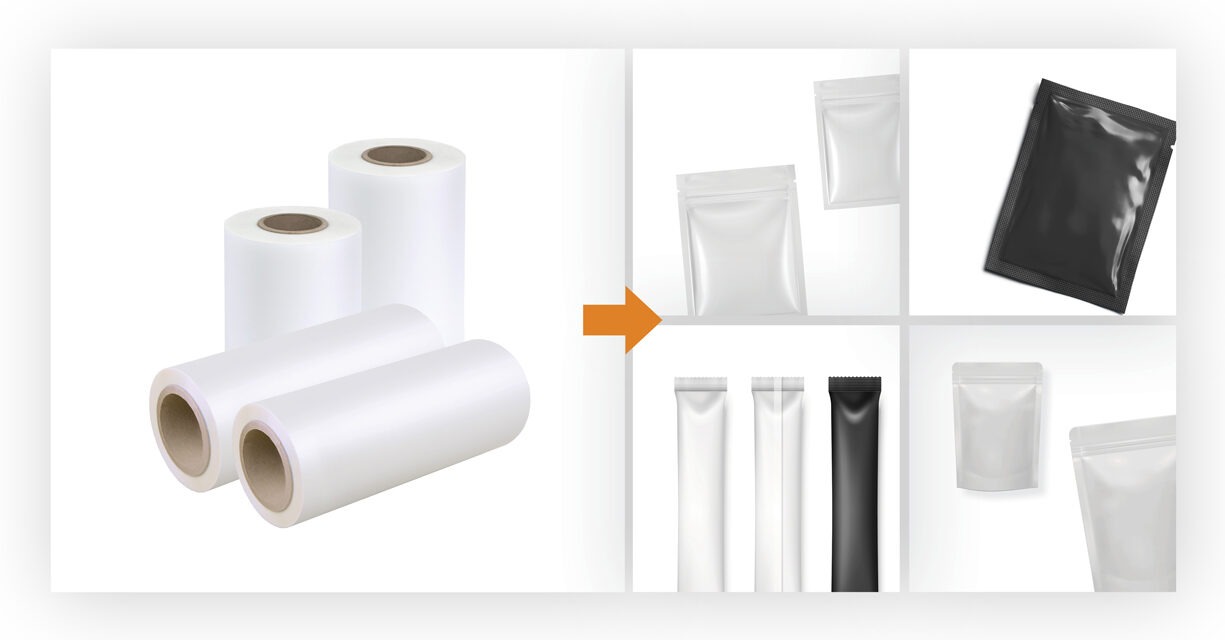
Packaging materials that are easily pliable and can be molded into a variety of shapes are referred to as flexible packaging.The food, cosmetics, pharmaceutical, and home goods industries all make extensive use of this form of packaging, which includes bags, pouches, liners, and films.
In the competitive market of today, selecting the appropriate material is essential to striking a balance between cost, sustainability, and performance.Understanding material selections has never been more crucial due to stringent rules on food safety and recyclability as well as rising consumer demand for eco-conscious products.
In this article,it will walk you through the most popular materials for flexible packaging and assist you in choosing the one that best suits your brand and product.
What is Flexible Packaging?
Flexible pouch packaging is well-known for being inexpensive, lightweight, and format-adaptable.It may be tailored to a product's shape, unlike rigid packaging, which saves material waste.

Key Benefits of Flexible Pouch Packaging:
• Lightweight: Lowers carbon footprint and shipping expenses.
• Simple processing: Accommodates a range of shape, printing, and sealing methods.
• Cost control: Materials can be customized for high-end or low-cost solutions.
Common Materials for Flexible Pouch Packaging
The most common flexible packaging materials are Polyethylene (PE),Polypropylene (PP),Polyester (PET),Aluminum Foil (Al),Nylon (PA, Polyamide),Metalized Films (Such as VMPET, VMCPP).Each has distinct mechanical, sealing, and barrier qualities.
Businesses may maximize product freshness, shelf life, and regulatory compliance by being aware of these material properties.
Polyethylene (PE)
PE's cost-effectiveness and adaptability make it the most popular plastic for flexible packaging.
• Low-Density Polyethylene (LDPE) is a type of PE that is soft, flexible, and has good clarity.
• High-Density Polyethylene, or HDPE, is robust, stiff, and moisture-resistant.
Applications of Polyethylene
•LDPE's flexibility and sealability make it a popular choice for frozen food packaging, bread bags, and snack food packaging.
•HDPE is perfect for barrier liners, medical packaging, and detergent refill bags.
Features of Polyethylene
• Chemical Stability: Inert to a wide range of chemicals and solvents.
•Physical Characteristics: Suitable for heat sealing; robust but flexible.
• Barrier qualities: weak oxygen barrier, good moisture barrier.
•Safety Standards: FDA and EU-approved for contact with food.
More than 60% of all flexible packaging used in food applications in the United States is made of polyethylene-based films, according to the Flexible Packaging Association (FPA)
Polypropylene (PP)
PP is a thermoplastic resin polymerized from propylene monomers, and common types include:
• Biaxially Oriented Polypropylene (BOPP): After biaxial stretching treatment, its strength and transparency are improved;
• Cast Polypropylene (CPP): Formed by melt casting, with good flexibility and excellent heat-sealing property;
• Unstretched Polypropylene (CPP): Directly extruded and formed, with low stiffness.
Application Scenarios
• BOPP: Outer layer of composite films (such as biscuit bags, potato chip bags), tape base films, cigarette packaging films;
• CPP: Inner layer of composite films (heat-sealing layer), stationery packaging;
• Special PP films (such as retort-grade CPP): Can be used for retort pouch microwave food packaging (resistant to 121℃ high temperature).
Characteristics
• Mechanical properties: Higher strength than PE, good stiffness (especially BOPP), but easy to embrittle at low temperatures (easy to crack when < 0℃);
• Transparency: High (BOPP has transparency close to glass), good gloss, suitable for printing;
• High-temperature resistance: Better than PE (can withstand 100~130℃, retort-grade CPP is higher), can be heated in microwave ovens;
• Barrier property: Good water resistance, but general oxygen barrier property (slightly better than PE).
Advantages
• High cost performance: The cost is between PE and PET, with balanced performance;
• Strong printing adaptability: High surface tension, can be printed without pretreatment (bright colors);
• High-temperature resistance and microwaveability: Suitable for food packaging that needs heating;
• Light weight: The density is only 0.9g/cm³, lighter than PE.
Polyester (PET)
PET is a polyester material formed by the polycondensation of terephthalic acid and ethylene glycol. In flexible packaging, biaxially oriented polyester (BOPET) is mainly used.
Application Scenarios
• Outer layer of composite films: Such as retort pouches (high-temperature resistant), cosmetics packaging, moisture-proof bags for electronic products;
• Label films: Labels for beverage bottles (such as mineral water, cola bottles), labels for daily chemical products;
• Used alone: High-strength packaging bags (such as express document bags, clothing bags).
Characteristics
• Mechanical properties: Extremely high strength (tensile strength is 3~5 times that of PE), puncture resistance and tear resistance;
• Temperature resistance: Can withstand -70~150℃, suitable for high-temperature retorting (121~135℃) and low-temperature freezing;
• Barrier property: Better air tightness than PE and PP.According to Transcendia, PET has an oxygen transmission rate (OTR) of 0.19 cc/100in²/day, which guarantees superior barrier function.
• Limitations: Poor heat-sealing property (needs to be compounded with heat-sealing materials such as PE and CPP), and the cost is higher than PE and PP.
Advantages
• Good dimensional stability: Not easy to shrink at high temperatures, suitable for precision packaging;
• Excellent chemical resistance: Resistant to oil and solvents, suitable for packaging oily foods;
• High transparency: Better gloss than PP, suitable for high-end product display.
Aluminum Foil (Al)
Aluminum foil is a metal film made of pure aluminum through calendering processing, with a thickness usually of 6~20μm. It is rarely used alone in flexible packaging (easy to wrinkle and break) and is mostly compounded with PET, PE and other materials.
Application Scenarios
• Food packaging: Tea bags (oxygen and moisture barrier), powder packet(light-shielding and fresh-keeping), high-temperature retort pouches (composite PET/Al/CPP);
• Pharmaceutical packaging: Packaging for tablets and capsules (barrier to water vapor and light);
• Industrial packaging: Packaging for precision electronic components (moisture-proof and anti-oxidation).
Characteristics
• Top-level barrier property: The permeability of aluminum foil to light, air, and moisture is almost zero.Gauges ranging from 5μm to 45μm are frequently utilized in food and pharmaceutical packaging, according to Finfoil.When compared to plastic films, its barrier qualities can increase shelf life by three to five times.
• Physical properties: Soft in texture but easy to wrinkle, easy to break after wrinkling, and poor puncture resistance;
• Chemical properties: Not resistant to strong acids and alkalis (easy to corrode), need to be protected by compounding with PET and other materials.
Advantages
• Extend shelf life: The barrier property is far better than that of plastic films, which can extend the shelf life of food and medicines by 3~5 times;
• Safety: Food-grade aluminum foil is non-toxic and has no migration risk;
• Light-shielding property: Avoid product deterioration caused by ultraviolet rays (such as vitamins, essential oils).
Nylon (PA, Polyamide)
PA is a general term for polyamide materials. In flexible packaging material, biaxially oriented nylon (BOPA) is commonly used, which is polymerized from caprolactam and has outstanding flexibility and impact resistance.
Application Scenarios
• Frozen food packaging: Such as packaging for quick-frozen dumplings and steaks Frozen Food Packaging (resistant to low temperature of -40℃, not easy to brittle);
• Vacuum packaging: Such as vacuum bags for meat and braised products (puncture resistance, preventing bones from piercing);
• Daily chemical packaging: Standing pouches for laundry detergent and dishwashing liquid (resistant to extrusion and impact).
Characteristics
• Mechanical properties: Extremely strong puncture resistance and impact resistance (better than PET), good flexibility (still soft at low temperatures);
• Barrier property: Medium oxygen barrier property, general moisture barrier property (needs to be improved by compounding with PE and aluminum foil);
• Temperature resistance: Can withstand short-term high temperature of 120℃, suitable for retorting (needs to be compounded with CPP);
• Limitations: Strong hygroscopicity (easy to absorb moisture and expand), high cost.
Advantages
• Suitable for 'hard/angry' products: Such as products that are easy to pierce the packaging, such as bones and nuts;
• Excellent low-temperature resistance: Maintains flexibility at -40℃ without embrittlement risk;
• Chemical resistance: Resistant to oil and most solvents, suitable for daily chemical and food packaging.
Metalized Films (Such as VMPET, VMCPP)
Metalized film is a layer of aluminum (30~50nm thick) vacuum evaporated on the surface of PET, CPP and other films, which has the advantages of both plastic film and aluminum, and its cost is lower than that of aluminum foil. Common types:
• VMPET: Metalized PET film;
• VMCPP: Metalized CPP film.
Application Scenarios
• Snack packaging: Potato chip and biscuit bags (composite BOPP/VMPET/PE);
• Gift packaging: Candy and chocolate bags (metallic luster improves the grade);
• Daily necessities packaging: Washing powder bags and cosmetics bags (light-shielding and moisture-proof).
Characteristics
• Barrier property: Better light-shielding and oxygen barrier properties than pure plastic films, but lower than aluminum foil;
• Physical properties: More fold-resistant than aluminum foil (not easy to break), light weight (only 1/10 of aluminum foil);
• Appearance: Strong metallic luster, good texture after printing.
Advantages
• High cost performance: The barrier property is close to that of aluminum foil, and the cost is only 1/3~1/2 of that of aluminum foil;
• Good processability: Resistant to wrinkling, suitable for high-speed packaging production lines;
• Light weight: Reduce material consumption, in line with the trend of environmental protection.
What Factors to Consider When Selecting Flexible Packaging Materials?
Choosing the best flexible packaging material for your company requires a comprehensive strategy that takes long-term value and functional performance into account.First and foremost, particular needs will depend on the type of your product. For example, perishable goods need films that are resistant to oxygen to prolong their shelf life, while moisture-sensitive products may require materials with excellent barrier qualities.Beyond product attributes, environmental effect is becoming more and more important in today's market. In order to meet global sustainability targets, firms are expected to use recyclable, compostable, or renewable materials.
Cost is another important consideration, but brands with worldwide market experience recognize the value of considering the entire cost of ownership, which takes into account factors like shelf attractiveness, transportation savings, and production efficiency, rather than just upfront pricing.
Furthermore, regulatory compliance is non-negotiable: your packaging materials must adhere to local, FDA, or EU food safety and labeling standards, particularly in sectors like healthcare, pet care, and food.All of these considerations can be adequately taken into account by collaborating with a reliable manufacturer who has proven experience with flexible packaging, like Puropak.
Conclusion
Selecting the ideal flexible packaging material is more than just a simple choice; it shows how dedicated your company is to customer satisfaction, environmental responsibility, and high-quality products.Companies are suggested to assess their packaging requirements in light of the type of product, sustainability objectives, cost effectiveness, and regulatory requirements.Future flexible packaging will prioritize clever, eco-friendly, and adaptable packaging solutions as material science advancements continue to advance.Visit Puropak today to learn more about dependable, high-performing packaging that can be customized for your company and take your business to the next level.